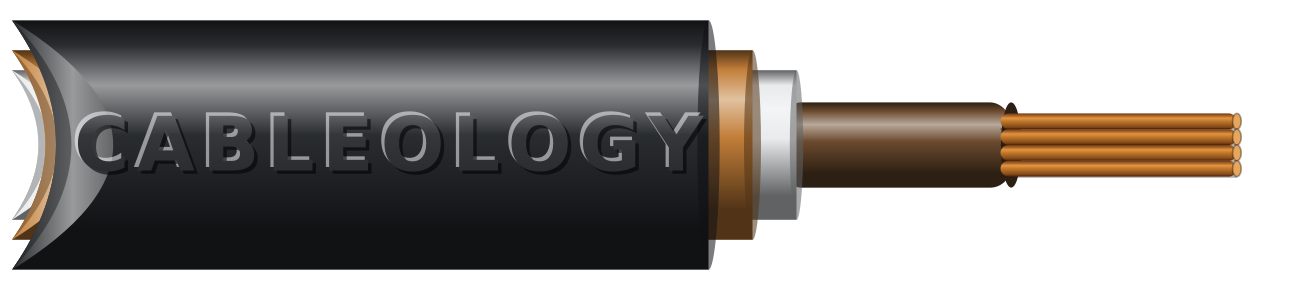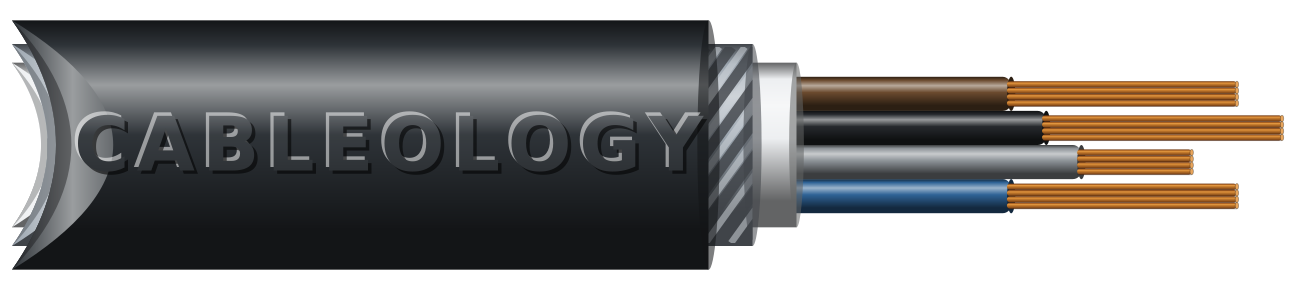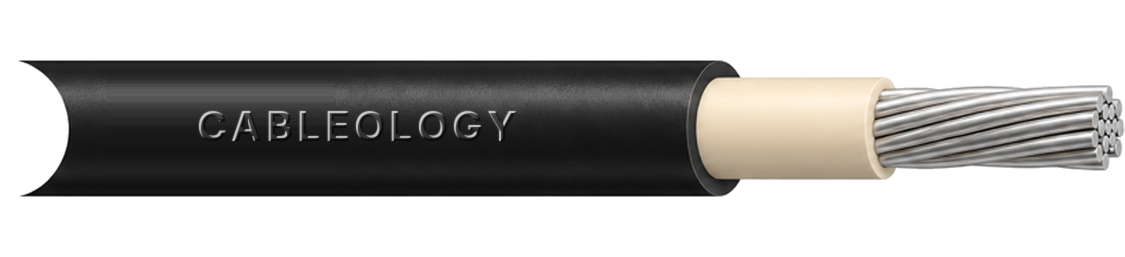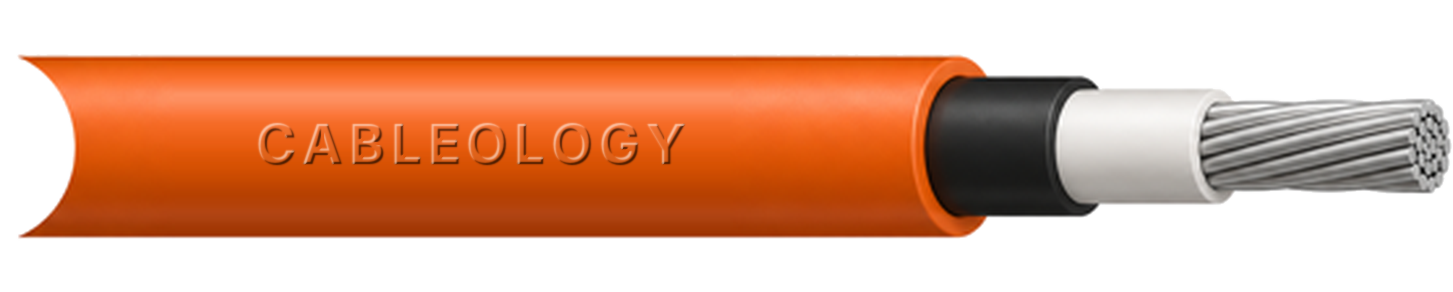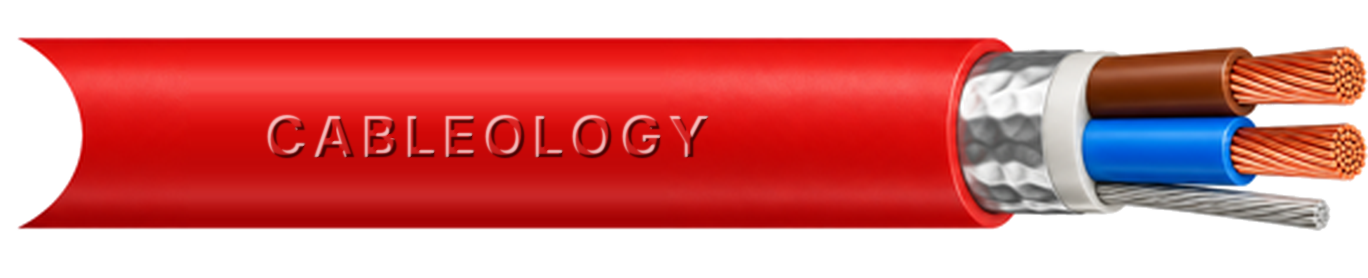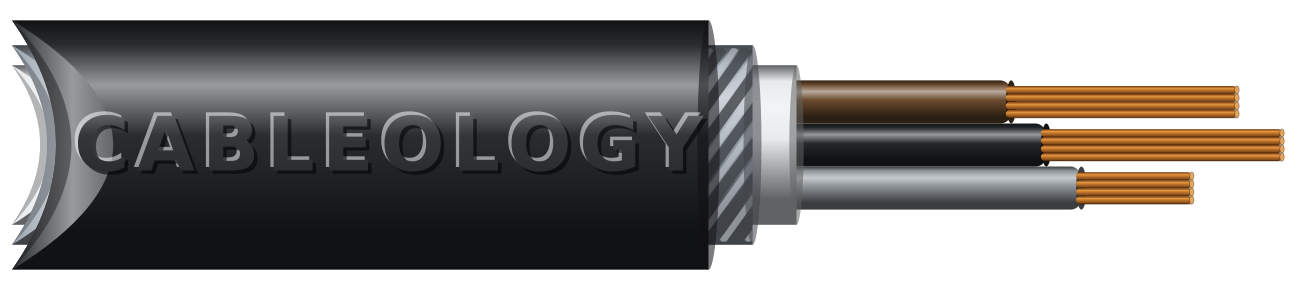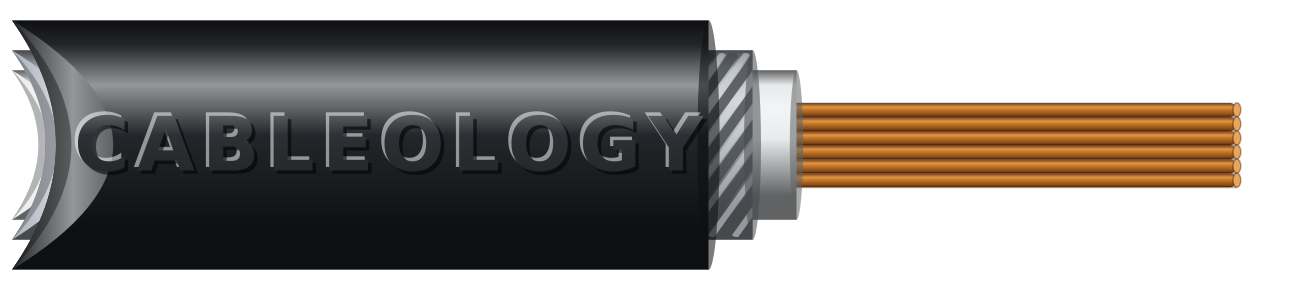
Single core armoured cables use aluminium wire armour rather than steel. Steel is magnetic, and a single conductor carrying alternating current inside a magnetic armour induces circulating currents and hysteresis losses in that armour, which heats the cable and wastes energy. Aluminium is non-magnetic, so it provides the mechanical protection without that penalty. These cables are used in large sizes, typically in sets of three or four laid in trefoil or flat formation.
Key applications
- Large submains and transformer to switchboard connections
- Supplies to main LV switchboards and busbar risers
- Generator and UPS connections at high current
- Circuits above the size range practical in multicore SWA
- Installation in trefoil or flat formation on ladder, cleats or in ducts
Features and benefits
- Non-magnetic armour avoids the eddy current and hysteresis heating that steel would cause on a single core a.c. circuit
- Available in sizes well beyond the practical limit of multicore armoured cable
- Smaller bending radius and easier handling than the equivalent multicore SWA
- Aluminium armour gives mechanical protection and a continuous earth path
- 600/1000 V, 90 °C XLPE insulation, consistent with the rest of the BS 5467 range
Specification notes and limitations
Never substitute a steel wire armoured single core for aluminium on an a.c. circuit — the armour will heat and the circuit rating will fall. Because the armour acts as a transformer secondary to the conductor, a voltage is induced along it. The IET's guidance sets out two approaches: solid bonding, where the armours are connected at both ends, which BS 7671 prefers and which allows the armour to act as a protective conductor but creates circulating current and heating that reduces the cable's rating; and single point bonding, available only above 50 mm² with a non-conducting outer sheath, which removes the circulating current but leaves a standing voltage that must be held below 25 V at full load. Gland plates must be non-magnetic or slotted so that a single core does not pass through a closed magnetic loop. Cleats must be rated for the electromagnetic forces under short-circuit conditions, and spacing and formation have to match the basis of the current rating used in the design.